Editing
Your book needs a lot more than a spellcheck.
Developmental editing
Books that sell require a powerful hook, coherent structure and flow, compelling character arcs, an orderly progression, believable dialogue, clarity of ideas, a plot that withstands stress-testing, well-calibrated pacing, and a satisfying climax.
Line editing
Professional writing is as clear as a windowpane. We’ll purge your sentences of wordiness, improve the logic and information flow, remove redundancies, and smooth out awkward phrasing, all while enhancing your voice rather than replacing it with ours.
Copyediting
All manuscripts need to be free from grammar problems, typos, filler words, unwieldy construction, and broken mechanics. Those things distract and annoy readers, throw people out of the story, and lead to bad reviews at online retailers.
Developmental Editing and Manuscript Evaluation
Editing is more of an art than a science, and we’re not going to use some cooked-up, one-size-fits-all formula. Nor will we turn your book into the book we would have written. Whether you’re an author of fiction or nonfiction, we’ll help make your book its best possible self so you can reach more readers.
Developmental editing focuses on big-picture items like plot, organization, chapter and scene structure, character development, point of view, setting and description, the hook, the tortured middle, the climax and conclusion, pacing, and so on. It includes two related services. First, we’ll read your manuscript with great care and write a ten-to-twenty-page (single-spaced) editorial letter that includes an overview of the manuscript and actionable, concrete steps for improving it. Additionally, we’ll add margin notes to the manuscript itself that point out troublesome sections, paragraphs, sentences, and even words—with surgical precision—so you’ll know exactly what needs attention and how to fix it.
Manuscript evaluation is a lighter and less expensive version of developmental editing for authors who may not need as much granular feedback but still want to find out what isn’t quite working and how to fix it. We’ll read your manuscript with great care and write a ten-to-twenty-page (single-spaced) editorial letter that includes an overview of the manuscript and actionable, concrete steps for improving it, but we won’t add margin notes to the manuscript itself.
Developmental editing and manuscript evaluation both answer the following questions:
-
- Does the opening grab the reader’s attention and refuse to let go?
- Does my novel have any plot holes or illogical turns of events?
- Is my nonfiction book properly organized?
- Are my characters believable and well-rounded enough that readers can imagine them as real people outside the confines of the story?
- Does the pacing feel right?
- Am I clearly explaining everything in the right order, or will readers feel overwhelmed or lost?
- Are there any boring parts that I should cut or revise?
- Are my suspense scenes actually suspenseful?
- How about my setting and description? Can readers “see” my story as if it’s a movie playing in their minds? Do I have too much or not enough?
- Does the dialogue sound right?
- Is the climax satisfying?
- Am I missing anything key?
- Does my book meet audience expectations and deliver on its promise?
- Will readers want to buy my next book after they finish this one?
Line Editing, Copyediting, and Proofreading
No publisher would ever skip this part of the editing process. They wouldn’t survive if they didn’t publish clean books.
Like all publishers, we rely on The Chicago Manual of Style to ensure quality and consistency, and we can recite it from memory. Two of us teach young editors how to use it properly and professionally without going overboard. While we might be grammar, punctuation, and word-usage geeks, we are not grammar cops. Only bad editors say you can’t break the rules if you know what you’re doing and your voice and style are better for it.
Everything is transparent, and all edits are optional. We track all the edits, and you’re free to reject any that don’t feel quite right for you. (We break a few rules in our own writing, although we do it carefully and with our eyes open.) And we’ll explain why we make changes if the reason isn’t obvious so you can trust that we’re not editing arbitrarily or imposing mysterious rules from above.
We certainly won’t step on your style or voice. A quality editor enhances an author’s authentic style and voice by removing errors, awkward phrasing, and lack of clarity that can get in the way.
Line editing improves paragraph structure, transitions, information flow, sentence construction, clarity, awkward phrasing, wordiness, logic, dialogue mechanics, the excessive use of passive voice, and more so that your writing is clear and compelling. Line edits are always suggestions as there’s no single, objectively correct way to line edit a manuscript. Editors who are writers themselves usually do a better job as line editors, and we’re all writers. It’s an art, and ultimately it comes down to skill, experience, and professional judgment.
Copyediting is about the little things: grammar mistakes, punctuation errors, typos, and so on that distract and annoy readers. No author can afford to skip this. Line editing and copyediting can sometimes be combined into a single service, depending on how much work the manuscript needs.
Proofreading is the final and sometimes optional stage before publication after a manuscript has been copyedited. A proofreader makes one last cleanup pass through the manuscript to fix stray errors. It’s less labor-intensive than copyediting and therefore less expensive, but it can’t replace copyediting.
If you’re not sure what you need, that’s okay. Send us an email, and we’ll figure it out together. You can also ask for a free sample edit and estimate so you’ll know exactly what you’ll get, how much it will cost, and how long it will take.
Testimonials & Featured Clients

“Writers searching for thorough, insightful, and immensely helpful editing will find it with Michael J. Totten. He helped me clarify murky language, fix problems with the plot, and add greater impact to the climax.” Caroline Taylor, author of Beautiful in Death
“If you’re looking for an editor to help you take your book to the next level, look no further than Michael J. Totten. I’ve always found his astute insights invaluable.” Scott William Carter, author of The Gray and Guilty Sea
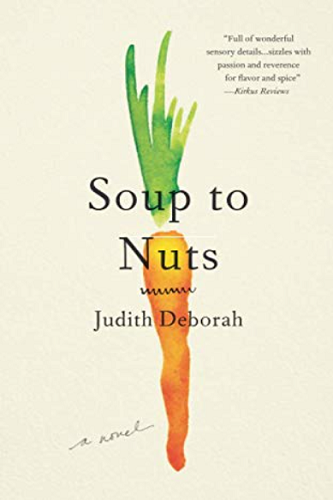
“I’ve admired Michael J. Totten’s work as a writer for years, but it turns out he is also a superb editor. He copyedited my most recent novel, and he was a delight to work with from start to finish. He’s quick, responsive, constructive, and sharp-eyed. You can’t go wrong working with him.” Judith Deborah, author of A Falling Knife: An Evan Adair Mystery
“I strongly recommend the services of Michael J. Totten. As an accomplished writer, journalist, and editor, Michael is second to none. He has helped me with two books and enormously improved both. He is very responsive to questions and concerns and easy to work with, and I look forward to working with him on my third book.” Fred Litwin, author of I Was a Teenage JFK Conspiracy Freak
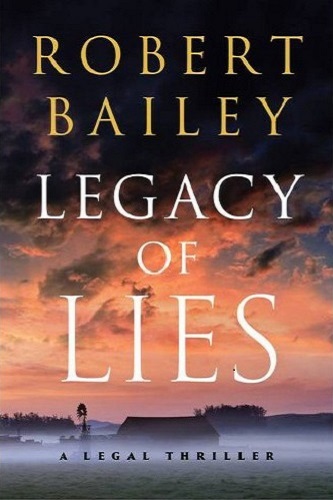
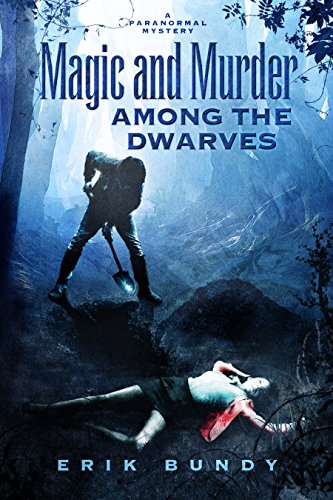
“Michael was both professional and prompt. He edited, did the interior design, and published two of my novels. He brings experience as a prize-winning author to the table, and this enriches his editorial and procedural insights and recommendations. His critiques were constructive, encouraging, and took my unique voice and strengths into consideration. I highly recommend him and intend to use him again.” Erik Bundy, author of Magic and Murder Among the Dwarves
Contact us
Reach out to our founder, Michael, and tell him what you’re working on, send him your questions, ask for a free sample edit, book a consultation call, or just say hi.
michael at inklabpublishing dot com