FAQ
Below are answers to frequent questions that incoming clients have.
I’ve finished my book but have no idea what to do next. Help!
If this is your first book or if you’ve never published a book before, you probably need to start with developmental editing that focuses on big-picture elements like plot (if you’re writing a novel), organization (if you’re writing nonfiction), character arcs, chapter and scene structure, description, viewpoint, and so on. There’s no point polishing individual sentences to perfection if the structure is off and you need to add or remove some material.
You might need line editing after the developmental editing is finished to make sure your sentences and paragraphs flow clearly and smoothly, but not every writer needs line editing, and sometimes that includes first-time authors. Many new authors require a little bit of line editing, and if that’s the case, we can combine that with copyediting for a single fee instead of charging you for two entirely separate rounds of editing when you only need one.
Every author needs a copyeditor to fix grammar glitches, garbled syntax, punctuation errors, typos, and continuity errors that plague literally every manuscript that has ever been written. If you’re a professional author, you can expect 2,000-3,000 corrections for a standard-length manuscript (80,000 words), and if you’re a newbie, you can expect that number to be double, triple, or even higher. The bottom line is that publishing a book that hasn’t been copyedited (or that was copyedited by a low-budget novice editor) means your book will go live with thousands of errors in it. No publishing company would ever release a book that hasn’t been copyedited, and if you’re your own publisher, you will need to adhere to professional standards.
I haven’t finished my book yet. Can you still help me?
Yes! You can save a lot of time, money, and angst by having us look at a manuscript in progress. First, it will cost less because we’ll need to read and review less material. Second, we can identify your strengths and weaknesses and teach you how to fix whatever isn’t quite working right so you can apply what you learn while finishing the first draft. By the time you get to the end, it will be in much better shape than it would have been otherwise.
Can you edit both fiction and nonfiction?
Sure can. Almost half the books we work on are nonfiction, mostly business books, memoirs, and how-to books but also books about history, finance, economics, and politics. With fiction, roughly half the books we work on are general and contemporary fiction, and the other half are genre fiction: mysteries, thrillers, science fiction, fantasy, and horror.
Should I find an agent and publish traditionally?
Traditional publishing is broken. Not even the big five publishers pay enough anymore. When it comes to advances, $5,000 is the new $50,000. They say “no” way too often and leave extraordinary writers out in the cold. The big publishers won’t even consider your book unless they think it has a chance to be a bestseller. If a book is garbage that they can sell, they’ll say yes, and if it’s brilliant but they aren’t sure which category to slot it in, they’ll say no. If they think it’s destined to be a mid-list book (which is the fate of the overwhelming majority of successful books), they won’t consider it.
Agents know what publishers are looking for, but most of them aren’t writers or editors. They don’t know the craft like we do, and they routinely give baffling and idiotic revision advice to writers. We can share horror stories all day, but this isn’t the place for it.
There are so many myths about traditional publishing. One is that publishers will market your book. Most of the time, they will not unless you’re already a bestseller. They’ll expect you to do that yourself, which is why they want you to describe your “platform” in your book proposal. They’ll be delighted if you have millions of social media followers, but do you?
Traditional publishers only pay writers around 8 percent of the book’s sale price. That’s not nearly enough to make your own marketing efforts worthwhile. Meanwhile, you can earn 70 percent if you’re the publisher, so you have every incentive in the world to market that book, and it’s a lot easier to do so profitably if you’re earning nearly ten times as much per copy sold.
Publishing companies can get your book into physical bookstores in addition to online bookstores, but here’s the brutal truth: Your book still won’t appear in most physical bookstores, and even if it does, it will only sit on the shelf for a couple of weeks. Unsold copies will be returned to the publisher and destroyed, and your book will never again see the light of day if it’s not a huge seller right out of the gate. Thousands of books are published every month, and your book will be removed from the shelves to clear space for the new ones.
That said, it’s possible that you’ll get a $100,000 advance from a publisher. It happens. It’s a little like winning the lottery, but it happens.
In the modern era, the vast majority of writers are better off publishing books themselves (assuming they’ve written good books). As long as you hire a professional editor and cover designer, and as long as you follow best publishing practices (which you can master within a couple of days with our help if you lean into it), you can publish anything you want without permission, you’ll have full creative control, you’ll get the same level of service as you’d get from a publishing company, and you’ll earn more money.
Can I publish my book without hiring an editor or a cover designer?
No. Well, you can, but we’re all professional writers here, and we’d rather chew off our own legs than publish an unedited book. Even writers who double as editors (hi!) need an editor. We can tell when a book hasn’t been professionally edited after reading no more than the first paragraph. The average reader’s eyes aren’t as sharp as ours, but they still recognize amateur writing when they see it, and they will move on and read something else. If you get a bunch of reader reviews that say, “This book needs an editor,” you’re done. You might as well unpublish that book.
And unless you’re already a professional book cover designer, don’t even think about creating a homemade cover, even if you’re a Photoshop expert. You might think yours looks adequate, but we promise—it doesn’t. Because you don’t know what kind of art to use for your particular subgenre (and what that subtly communicates to book buyers), what kind of typography to use, how many elements go on the front and back and where to place them, how to attract the right readers and repel the wrong ones, and so on.
When ebooks were new, it was possible to crank out a book, sloppily edit it, slap on a homemade cover, upload it to Amazon, and make a decent amount of money. Those days are long gone. Independent publishing is fully professionalized now, and it has been for a while, so to stand out and have a decent shot, you’ll need to do everything right.
Most self-published authors fail, and it’s usually for one (or more) of the following reasons:
- Their books are badly written.
- Their books are not professionally edited (see above).
- Their books have homemade covers.
- They don’t market their books.
You’ve invested years of time and effort to get this far. Writing your book is 90 percent of the job. Don’t neglect that critical 10 percent at the end.
Do I really need to market my book?
Yes, you really need to market your book. There are literally millions of books for sale on Amazon. If you don’t do something to make yours visible, it will sink to the bottom of the ocean.
Here’s the good news: The vast majority of books are never marketed, so you won’t be competing for space with all of them or even very many of them. Also, most books for sale have fatal flaws that even the best marketing can’t fix: bad writing, amateurish or nonexistent editing, homemade covers, or bland book descriptions (blurbs). And finally, marketing books is easier and less expensive than you probably think. If you don’t know how or don’t want to, we’re here to help. And unlike traditional publishers, we will actually do it.
The publishing part is pretty easy, right?
Compared to writing a book? Yes. But that doesn’t mean it’s something you can just check off your list. In addition to publishing at online retailers, you need a strategy. Marketing is an obvious part of that strategy, but you need a solid foundation first. Everything needs to be solid: writing, editing, design, book description, metadata, and retail positioning. You need to think like a businessperson.
Writers are creative types who generally don’t like to think about business. We’re sorry, but you have to. Your book’s product page is a sales funnel, and you can lose potential customers at every step through that funnel. Your book cover’s job is to convince potential readers who like the look of the thumbnail size to click on it so they can see the full size. The full-size book cover’s job is to convince potential readers to read the book description. The book description’s job is to convince potential readers to read the first page of the book. The first page’s job is to convince potential readers to read the second page and then purchase the book. If you screw up at any point along that journey, potential readers will not buy your book no matter how brilliant your marketing strategy. Your job, and ours, is to nail down every piece of the foundation. It took years for us to learn how to do all this correctly, and now that you’re working with us, we’ll share what we know all at once so you don’t have to learn it the hard way.
If you publish my book, are you the publisher, or am I?
We can handle the technical side if you want, but you’re the publisher. If you have a publishing company name and logo or want to create them, we can add them to the cover and the copyright page. You own all rights to your intellectual property forever. All money flows to you, not to us. We will not take a cut.
Can I call you?
You can schedule an initial consultation call via phone or Zoom at no cost. You can tell us about what you’re working on, and we’ll help you figure out what you need, what we can do for you, how much it will cost, and what you can do yourself to save money if you’re on a budget and aren’t afraid of learning new things.
You can’t edit your own book, not even if you’re a professional editor, and you can’t design your own cover unless you’re already a professional cover designer, but you can learn to write your own blurbs, to design paperback interiors and ebooks, and to market your book using ads or promotion sites. These are powerful skills worth learning if you hope to write and publish a catalog of books, but if you’re only ever going to write one or two, we can do it for you.
Just shoot us an email via the contact form at the bottom of this page, and we’ll get you scheduled and squared away. All of us are in Pacific time.
What’s it like to work with you?
First of all, there are only a handful of us. We’re not a soulless corporation that answers the phone with a chatbot or that assigns your book to a random, anonymous, replacement-level editor with questionable experience. We will not put AI slop on your cover or have ChatGPT “edit” your book. We’ve all been at this for decades, we love our work, and we’d happily do this for free if we lived in a demonetized Star Trek economy.
We’re professional, prompt, and polite. We do what we say we will do, and we form actual friendships with the writers we work with surprisingly often. Perhaps we should not be surprised. We’re all writers, after all, in addition to being editors, designers, and publishers, and we’re on the same team when people like us ask for help.
And because we’re also writers, we know how it feels to be edited because we’ve all been edited by somebody else. Sharing our work with others is an intimate and personal experience, especially when the draft is still raw.
We promise to be nice about it, but we’d rather risk hurting your feelings than let you publish a bad book. We’re your last line of defense. If we don’t warn you that you’re about to make a mistake, nobody will. Agents reject 99 percent of submissions, and readers who don’t know you won’t give you more than a page or two if you don’t impress them—and they’ll move along and forget you ever existed.
It’s tough out there, but don’t worry—we’ve got you.
Contact us
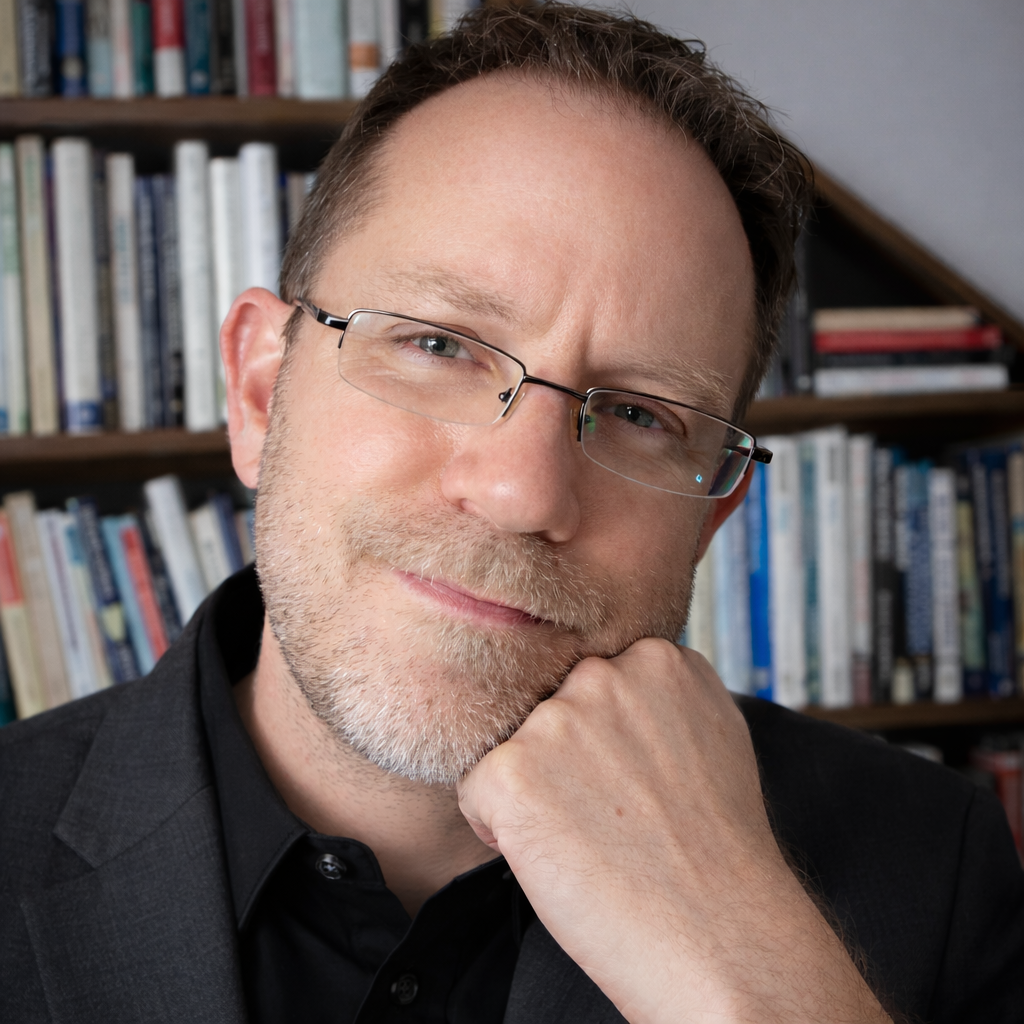
Reach out to our founder, Michael, and tell him what you’re working on, send him your questions, ask for a free sample edit, book a consultation call, or just say hi.
michael at inklabpublishing dot com